There is a childhood memory shared by my millennial peers in the US: 9/11. The first time that many in my generation learned that big, bad things could happen to our country.
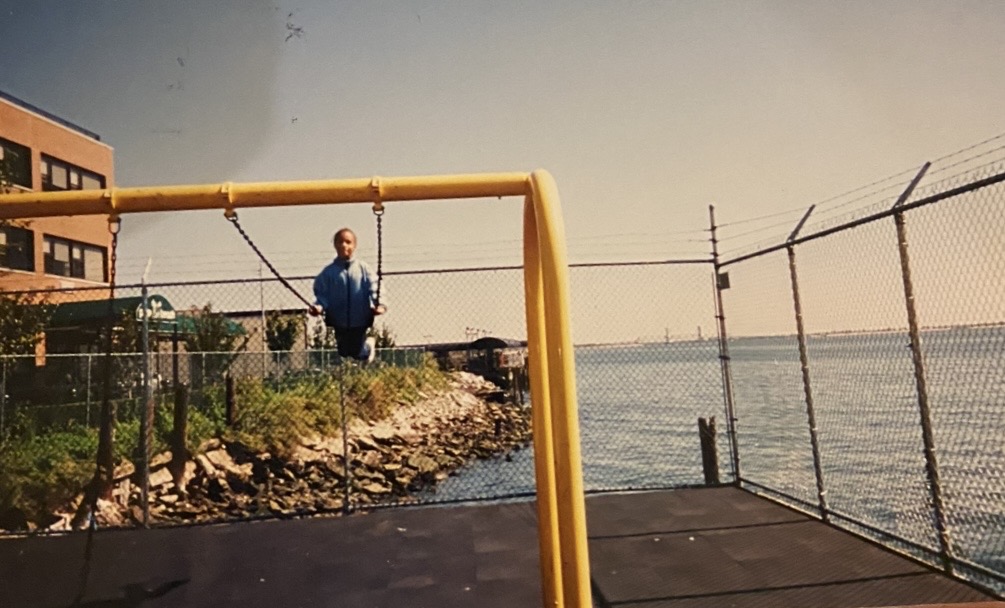
My mother and I spent that summer living in a homeless shelter. I had traded the escapism I sought in school for the literal sense of flight I could take in the shelter’s swingset, but I eagerly pulled my head out of the soaring clouds for a chance to bury it back in my books come September. It was my first experience taking the “cheese bus” to school, as we called it. Everyone knew you were a shelter kid when you boarded at my stop.
I was in fourth grade and my wonderful teacher, a Miss Honey type, was playing Mozart on the classroom boombox. She had heard that classical music was good for growing brains and often left it to hum in the background as we worked on assignments.
A female school aide appeared and asked to speak with our teacher just outside the classroom door. I was a goody-two-shoes, but not above gathering gossip, so I soon grabbed the bathroom pass to eavesdrop on grown folks business. I noticed my teacher didn’t look happy with whatever the aide was telling her.
By the time I was back from my pretend pee, my teacher had switched the radio to a news station. I couldn’t quite understand it, but their words sounded scary. She shot up a look at the classroom and lowered the volume so that only she, now craning her neck, could hear it. If I recall correctly, her husband worked at the World Trade Center. It must have been gut-wrenching for her, but she attempted to shield us from the news.
The same school aide returned to our classroom and called the name of one student. “Sweetheart, get your jacket and your backpack and come with me.” The energy of the classroom shook awake. We were collectively wondering what it could be. Perhaps the student was in trouble or maybe they had a doctor’s appointment and would return with a Happy Meal to make us all jealous.
When the aide later returned for a second student, I thought, wow, what a coincidence. But then her trips to our classroom didn’t stop. She began reading off a list of students she needed to pick up, and she was growing short with us. “Hurry up! No, you can’t go to the closet! Let’s go!”
By this point, there was a collective knowing that something was, in fact, really wrong. As we wondered which students would be picked up next, I imagined how I’d quickly and obediently join the school aide if my name was called. Eventually, it was.
My group rushed behind the aide, along sterile squares of school flooring and descended a quiet staircase into a scene of pandemonium. I don’t know if this detail is accurate, but I recall the main floor being dark, as if the lights had gone out. Parents were cordoned off to different areas in the hallways and some were getting audibly upset. I remember one parent screaming, “What if they bomb the school?” I didn’t know who “they” were, but I doubted her concerns. I was a poor kid in Brooklyn. Who would care enough to bomb me, I thought.
There’s another memory about this day that my mother once told me was incorrect: that we waited for a fax from the mother of a girl I was friends with at the shelter so that my mom could check her out of school as well. Perhaps we’d been in the main office for something else. With all of the chaos going on, I’m sure the school wanted proof that strangers weren’t coming off of the street to kidnap children. They did their due diligence to get kids speedily reunited with their proper guardians.
And it had to have taken a lot for my mom to leave the shelter and walk the few blocks to pick me up. She was ill and unable to go much of anywhere alone at this point. Maybe my memory of being with a friend from the shelter was that my mother had walked to the school with the help of another parent who also needed to pick up their child. Either way, we made it home.
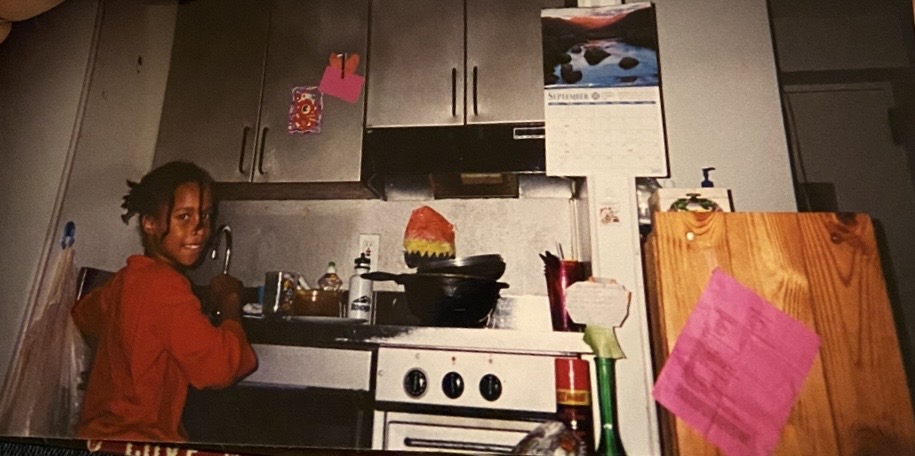
Returning to the shelter meant being back in our tiny room. An L-shaped space with a television bolted to the wall and a twin bed for us each. This is where I first saw the scene over at the World Trade Center.
The news anchors were saying things that I couldn’t grasp, but I finally understood that tragedy was unfolding. They were constantly replaying footage of the second plane going into a tower, and I stood in the middle of the room unable to look away. Until the television cut out mid stream. My mother turned to me with a familiar grimace. “I probably shouldn’t be letting you watch this stuff, should I?” She relinquished me to the shelter’s private playground and my happy place: the swings.
Prior to our time in the homeless shelter, I wasn’t often allowed outside to play. That changed because the playground at the shelter was protected. Some women were fleeing abusive partners, and the facility had taken safety measures. No one could even enter the building without being identified and getting buzzed in. Add in the pint-sized rooms we all lived in plus the fact that the television feed was now cut, and I think my mom felt that sending me out to play on this day might be the best move. It seemed like all the other parents in the shelter had the same idea. The playground was full of children.
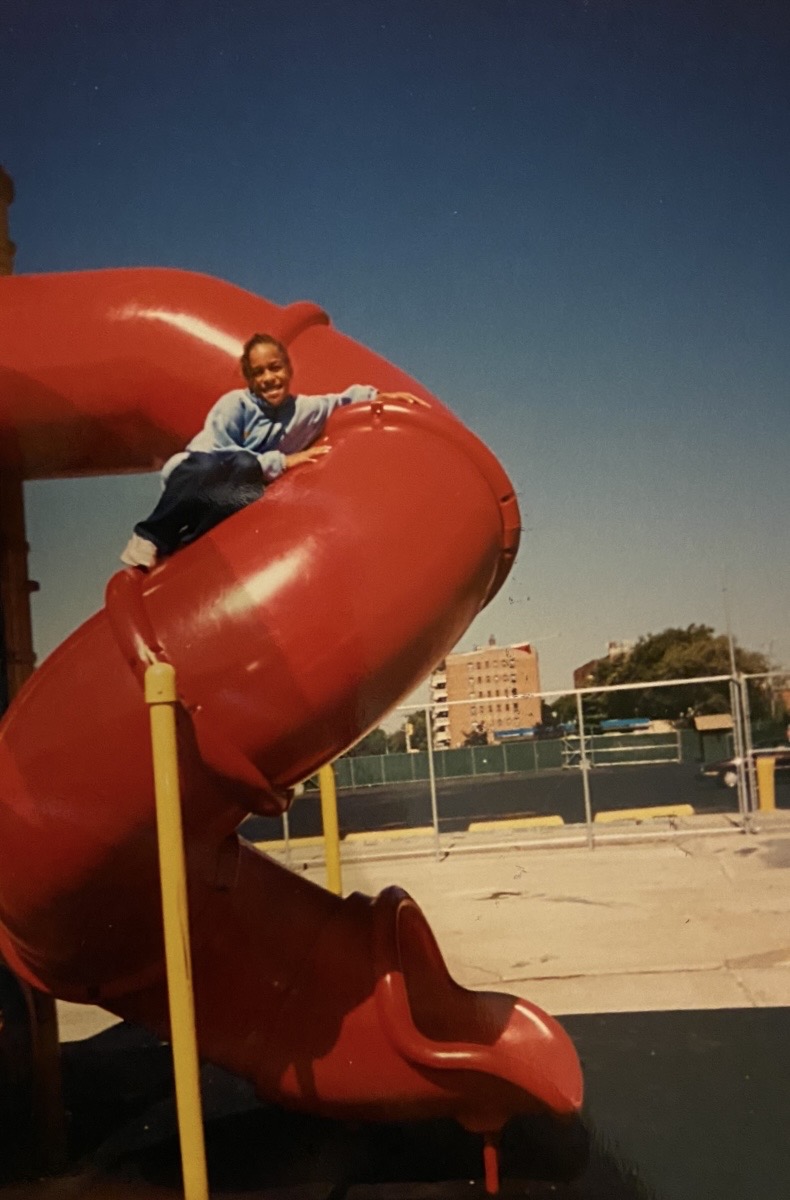
Being a kid is an interesting experience. You try to understand big events as best as you can, but you still also want to put your energy somewhere, and sometimes that means playing even when the world as you know it seems to be falling apart. There were so many of us running around, going down the slide, and pumping ourselves upward on the swings.
All of a sudden, we saw hundreds of papers flying through the sky. Some of them were landing into the Sheepshead Bay, the namesake of our neighborhood. Others were floating across the playground, the stench of smoke flittering behind them.
Kids were running around and picking pieces up. I jumped off the swings and did the same. One was from the day’s newspaper. It was charred around the ends and hardly bigger than my own hand. Again, being a kid shapes what we can comprehend. I could understand some of the sorrow of the moment because I had a thought that said: this paper may have been in someone else’s hands today who is not living anymore. But the gravity still hadn’t fully hit me.
I caught another document that I had some familiarity with only because I’d watched a lot of television. It was a large piece of pristine accordion paper. When I opened it up, it had a series of graphs. I knew this had to be for a business, but I understood little else.
There was a parent on the playground who shouted that the pieces of paper might be worth money one day. As we were all poor enough to be living in a homeless shelter, I held on to a few pieces of paper. I thought I might be a good daughter if I carried something potentially of value to my mother, but I got the sense that I was wrong when I brought them upstairs to her. She looked disturbed. A year or so later, I asked my mother if she still had those papers. She told me she’d thrown them away back when I gave them to her. It’s something I understand now as an adult that I didn’t at eight years old. The same thoughts I had while holding the papers had also crossed my mother’s mind. Except she understood what death really meant.
I can’t say much about what the school environment was like in the days following 9/11. Our time in the shelter was up very soon after. My mother and I moved to Bed-Stuy while the city was still dealing with the aftermath of the attacks. I was yet again the new girl, and I never got to digest what happened with the people who were around me when it occurred. I still think about my fellow shelter kids to this day. I wonder where life took them and whether things got better for them and their mothers.
I did, unfortunately, learn that my godfather had perished in the Twin Towers. I am often curious about people’s memories of where they were on 9/11, but I normally don’t mention that I technically lost someone on that day. It always felt like it wasn’t quite mine to claim. He was someone my mother faded away from while she coped with the new circumstances of our life. I don’t have any memories of him and there’s just one photo that I know of us together, which is when he attended my christening. I tried to ask my mom for more information on him over the years, but I could tell it wasn’t something I was allowed to dive deeply into. Still, I would look at that photo and think of him as someone I missed out on. Had things gone differently, maybe we would have reestablished contact. He accomplished a lot in his short life, and I always thought he would have been a great role model for me. The fact that I longed for this throughout the years felt as embarrassingly selfish as it did that I brought those charred pieces of paper to my mother. These were things to be observed, but not felt. But every few years, I view the condolences people left online for him following the attacks. I have them bookmarked.
Prior to all of this, I was such an innocent child that I actually believed all of history had already taken place and that nothing big would occur in my lifetime. On that day in 2001, I learned that I was wrong. Perhaps that explains a difference in reactions. While it seemed my mother felt more comfortable avoiding the yearly 9/11 commemoration, I’d sit to watch the remembrances and cry.
The same memories of that day have stayed frozen in my mind decades later. They come back to me at random times, multiple times a year. Every year. That event showed my young brain that pain didn’t just take place within walls and in secret; tragedy could also happen to us as a larger collective and for all to see.
Each year felt like September 11th was a water well of mourning that had no bottom. And 30 plus years alive has shown me that life’s well of grieving will never run dry.









Share your thoughts and/or questions.